Fatal accident · The Netherlands
Belgian Air Force C-130 crashed near Eindhoven after bird strike
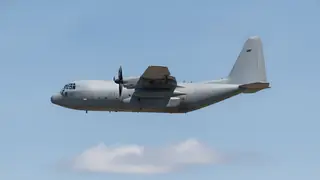
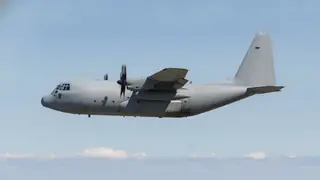
A Belgian Air Force Lockheed C-130H crashed near Eindhoven, The Netherlands, on July 15, 1996, while landing from Villafranca. There were 41 people aboard and 34 died. The crash followed a bird strike that led to failure of three engines.
This is one of 2 Belgian Air Force fatal accidents on record. See also all plane crashes in 1996.
The C-130 lost three engines on approach to Eindhoven
The Lockheed C-130H was attempting to land at Eindhoven Air Base when it flew into a large flock of lapwings and starlings. The strikes led to failure of the No. 1, No. 2, and No. 3 engines.
After that, the port wing hit the ground. The aircraft then crashed and burned, and the impact sequence ended with an explosion and fire. Bird strikes are common enough in aviation that they have their own safety category, but a multiple-engine event at low height left very little margin. Air crash investigators study these events by examining wreckage, engine damage, and the sequence of control loss, as outlined here on how investigators determine the cause.
The people aboard included a Dutch Army Band returning from Italy
The Belgian Air Force transport was carrying members of a Dutch Army Band on the flight back from Italy. It was a military airlift, using a type widely employed for troop movement, cargo, and other transport work.
Military and civil operators alike used the C-130 for short and medium-range transport because it could carry people and equipment into air bases with limited infrastructure. In this case, the aircraft was nearing the end of the trip when the accident happened. Seven people survived.
Near Eindhoven, the crash showed how dangerous low-altitude bird strikes can be
Near Eindhoven, the accident showed the particular danger of a bird strike during approach. At that stage of flight, the aircraft was low, configured for landing, and had little time or altitude to recover from major power loss.
Bird ingestion can damage compressors, bend blades, and shut engines down. When several engines are affected at once, control can become difficult very quickly, especially in a four-engine aircraft where thrust changes across the wings matter. More background is here on other accidents with the same cause and on broader bird strike statistics.
Questions people ask about this accident
What caused the Belgian Air Force C-130 crash near Eindhoven in 1996?
The crash was caused by a bird strike. The aircraft hit a large flock of lapwings and starlings, and the No. 1, 2, and 3 engines failed.
How many people died in the Eindhoven C-130 crash?
Thirty-four of the 41 people aboard died. There were no fatalities on the ground.
Who was on board the Belgian Air Force C-130 at Eindhoven?
The aircraft was carrying members of a Dutch Army Band who were returning from Italy.
What happened after the C-130 struck birds at Eindhoven?
After the bird strike and loss of three engines, the port wing hit the ground. The aircraft crashed, exploded, and burned while attempting to land at Eindhoven Air Base.
Related accidents
- 13 killed, 8 on the ground
 69 killed
 1 killed, 22 on the ground
- 49 killed, 3 on the ground
- 13 killed
Correct this page or send a photo
Spotted a wrong date, registration or number? Have a photo of the aircraft or the site that you took yourself? Send it here. Nothing is published until an editor has checked it.